

When organizations need better restroom access, they often start by looking at ADA restroom trailers. Trailers are mobile, comfortable, and familiar. But they are not the only option. In some situations, a restroom skid may be a better fit.
Both ADA restroom trailers and restroom skids can provide accessible sanitation for public facilities, emergency response, job sites, remote locations, events, and long-term operations. The right choice depends on how the unit will be used, where it will be placed, how often it must move, and what kind of site support is available.
Before buying, it helps to understand the difference.
What Is an ADA Restroom Trailer?
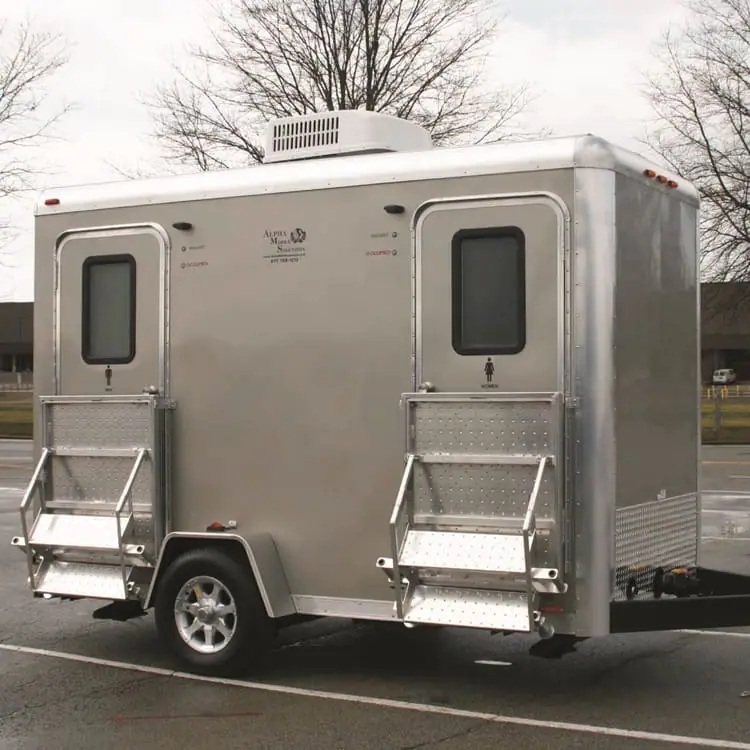
An ADA restroom trailer is a mobile restroom unit built on a trailer chassis. It can be towed to a site, placed where needed, leveled, connected, and used for temporary or long-term restroom access.
ADA restroom trailers are commonly used for public events, government sites, schools, construction projects, disaster relief, parks, campgrounds, commercial properties, and temporary facilities. They can include ramp access, wider entry, handrails, accessible fixtures, climate control, lighting, flushable toilets, sinks, and private interior space.
A trailer is often the right fit when mobility matters. If the unit needs to move between events, projects, or locations, a trailer can make transportation more straightforward.
What Is a Restroom Skid?
A restroom skid is a skid-mounted restroom unit designed to be placed at a site without a traditional trailer chassis. Skids can be useful when a site needs a durable restroom solution but does not necessarily need frequent towing.
AMS Global’s restroom skid content highlights skid-mounted restroom units for locations where a trailer may not be ideal. The company’s listed skid features include durable finishes, ADA options, vacuum toilets, ventilation, insulation, and components designed for long-term use.
Restroom skids can be especially useful for remote sites, workforce housing, parks, municipal areas, industrial sites, camps, and facilities where the unit may stay in place for longer periods.
Mobility vs. Long-Term Placement
The first question is simple: will the unit move often?
If the restroom will travel from event to event or project to project, a trailer is usually the more practical choice. It is designed for towing and repeated deployment.
If the restroom will stay in one location for an extended period, a skid may be worth considering. Skids can provide a more permanent-feeling setup while still avoiding the need for traditional building construction.
This is why rental companies often prefer trailers, while long-term facilities, remote camps, or industrial operations may consider skids.
Site Access and Placement
Site access can also influence the decision. Trailers need towing access, turning room, and a placement area suitable for the trailer and ramp. Skids may require forklift, crane, or equipment access depending on the unit and site.
A tight site may favor one option over the other. For example, a site with limited towing space but equipment access may be a better candidate for a skid. A site with easy road access and changing placement needs may be better suited for a trailer.
Before choosing, review the delivery route, surface conditions, utility access, service access, and long-term placement plan.
Accessibility Features Still Matter
Whether you choose a trailer or skid, accessibility should remain a top priority. Look at entry design, ramp or access approach, door width, handrails, grab bars, sink access, toilet placement, turning space, flooring, lighting, and user safety.
The best solution is not just technically accessible. It should feel usable and dignified for the people relying on it.
AMS Global offers ADA restroom trailers and ADA-compliant restroom skids, which gives buyers flexibility based on site type and deployment needs.
Utility Requirements
Both trailers and skids need a plan for water, waste, and power. Some applications may connect to existing utilities. Others may use tanks, generators, pumps, vacuum systems, or temporary service connections.
A trailer used for an event may need short-term support. A skid used at a remote camp may need a long-term maintenance plan. Either way, utility planning should happen before purchase.
Ask about water connections, waste discharge, power needs, heating, cooling, lighting, ventilation, service access, and winterization if the unit will be used in cold climates.
Appearance and User Experience
Trailers and skids can both provide a better user experience than basic portable toilets. Private rooms, running water, flushable fixtures, lighting, climate control, and durable interiors all matter.
For weddings, VIP events, public-facing sites, and customer-focused facilities, appearance may carry more weight. For industrial, remote, or workforce settings, durability and serviceability may be the bigger priority.
The right choice should match the people using it and the organization responsible for maintaining it.
Which One Should You Choose?
Choose an ADA restroom trailer if you need towing mobility, event flexibility, repeated deployment, or a polished mobile restroom solution.
Choose a restroom skid if you need a durable, longer-term restroom setup for a fixed or semi-fixed site where trailer mobility is less important.
AMS Global manufactures ADA restroom trailers, restroom skids, shower skids, combo skids, shower/restroom trailers, and other mobile sanitation solutions. If you are unsure which option fits your site, the best next step is to compare placement, utilities, transportation, accessibility, and maintenance needs with a knowledgeable manufacturer.
The right restroom solution should fit the site, serve the users, and make long-term operation easier.
Next steps: compare steel restroom skids with ADA compliant restroom trailers, or see the full range of Comfort Isle skids.